
Episode conversation
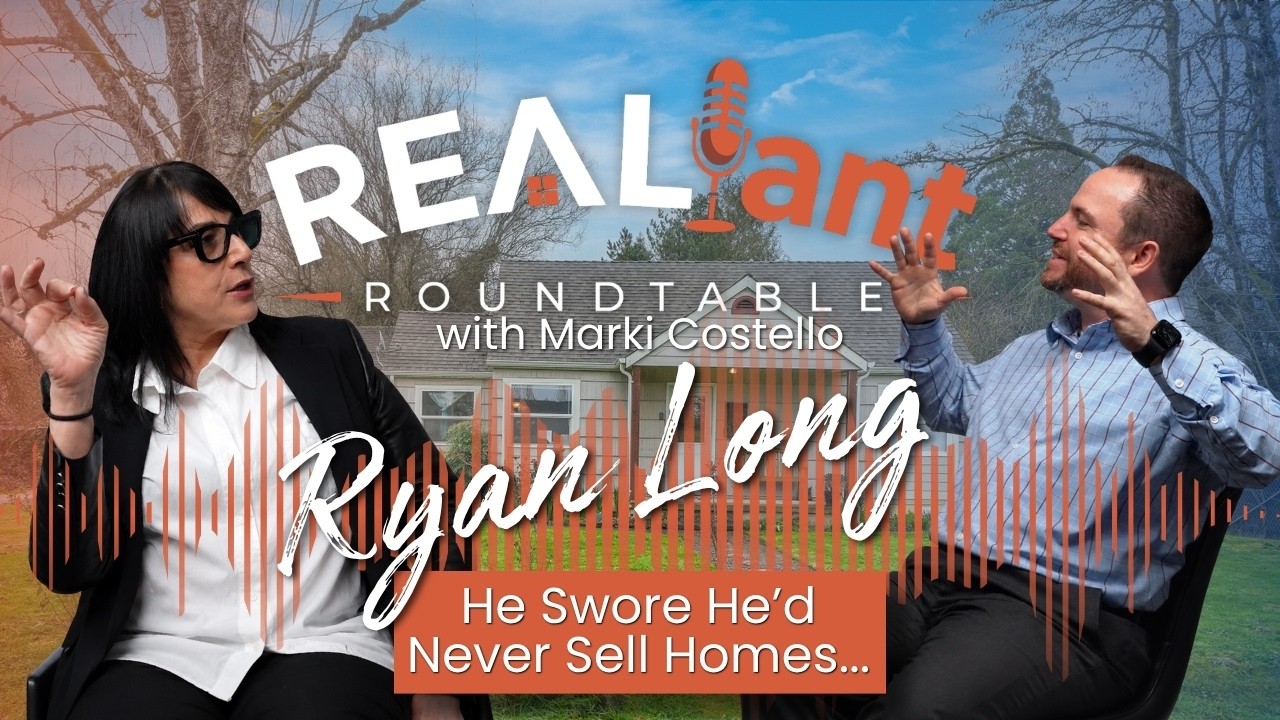
He Swore He'd Never Sell Homes
A conversation about an unexpected path into real estate, investing for the long term, and the housing ideas reshaping Corvallis.
Real estate is personal
When a property decision carries more than a price
Ryan Long once told his mother he would never become a real estate broker. His interest in investing and earlier work as a financial advisor eventually gave him a different way into the industry. In this Realiant Roundtable conversation, Ryan discusses rentals, house hacking, development, and the long-term thinking that now shapes his work in Corvallis.
Buying an investment property involves more than spotting a promising listing. Financing, occupancy, local demand, zoning, construction, and personal goals all affect whether an idea fits. Understanding those pieces can help buyers ask better questions before treating any property as a shortcut to wealth.
A useful investment strategy begins with a clear purpose, realistic numbers, and an honest understanding of the local market.
Watch or read
The complete conversation
The complete episode follows Ryan’s unexpected path into real estate and explores college-town rentals, furnished housing, house hacking, accessory dwelling units, middle housing, Corvallis development, and the value of building a recognizable personal brand.
Prefer to read? Open the complete lightly edited read-along below the video.
Read along with the episode
Marki Costello: Welcome to Realiant Roundtable, where real estate gets real. Today, we’re not just talking about homes, we’re stepping into the stories that live inside them. At the table, a powerhouse broker, Ryan Long. Him and his mother Sue have built a legacy over decades, and now as the next generation, he’s rewriting the playbook in real time.
Marki: Together, they’ve walked through front doors at life’s biggest turning points, first homes, last chances, fresh starts, and everything in between. Because real estate isn’t quiet, it’s layered. It’s emotional. It’s the sound of a deal holding on by a thread, and the moment it all comes together. This isn’t about listings.
Marki: It’s about people, the risks they take, the moves they make, and the stories that put the real in real estate. So lean in. You’re not just listening, you’re stepping inside. Welcome to the pod, Ryan.
Ryan Long: Thank you. Thank you. This is exciting.
Marki: Ryan, tell me a little bit about your story, about how you got into real estate. What’s your point of view or brand when it comes to real estate?
Ryan: I took a circuitous route, for sure.
Scott Kemp: I’m not even sure I know what that word means. You got it dumbed down. Vocabulary is all there. That’s all I can handle.
Ryan: It wasn’t my intention. I always told my mom, "Never gonna be a real estate broker," Yet here I am. So yeah, I grew up wanting to be a stockbroker. And so that would that’s. I’ve always been an investor and thought about things that way, which honestly has translated way better to real estate than I ever expected.
Marki: I find that fascinating because I’m a mom and I have two boys, and my oldest son, I would have never thought he would have kind of followed in my footsteps. If you would’ve asked me when he was young, I’d be like, "Ah, he’ll never do that." And I cast, my company cast the very first season of The Bachelor, and he’s casting it now.
Ryan: Generational, isn’t it?
Marki: Generational and a full circle moment. But I, it, and even my 16-year-old who is a sports nut and loves this and that, I was just auditioning with him yesterday for a movie role, like self-taping. So I just, I always go, is there something with boys and their moms?
Ryan: I think that’s a question for my psychiatrist or.
Marki: No, and I don’t mean that in a. I just think, look at my boys. I think girls are different with their moms. Than boys, and I just, it’s interesting to see a lot of boys do follow in their mom’s footsteps.
Ryan: I, my, both my parents are small business owners, and so everybody was like, "Are you gonna be a real estate broker or are you gonna be a veterinarian?" Those were my two choices.
Marki: Do you wanna put your hand up a cow’s ass to see if they’re pregnant? Can we say ass on the pod? It’s not the ass? Is he really?
Ryan: I’ve seen that a lot. Yes, I’ve.
Marki: I didn’t know that. Wait, so, and it’s not the ass. You can say ass on the pod. Did you, did that make you, did you have a love for animals and llamas?
Ryan: I like animals, but I don’t love animals. Probably saw enough blood and guts and everything else. Not. So the funny thing is that, I like bringing this up. My dad will hate it, but, one of the, benefits to being a veterinarian is that, and with specialty breeds when they’re trying to, create a market for it, they start saying, "Hey, we’re gonna sell llama meat.
Ryan: We’re gonna sell emu meat. We’re. " So some of my dad’s that, clients that haven’t made it, we’ve actually had, emu sausage and, a llama stew and all sorts of stuff.
Marki: Really? Is it good? Is it good? All right. Okay. I’m not eating gator.
Scott: I’ve tried alligator. I’ve been watching, this. This alligator wrangling show. I’d try it.
Marki: I did a show years ago. In Australia in Sydney, and I was like, "Do people eat kangaroo?" They eat kangaroo. And I was like, "Yeah, I’m not eating that cuddly, cute little kangaroo. Absolutely not." Yeah. Top of the morning to you. Okay.
Ryan: You must not be hungry enough.
Marki: Now how did you get into real estate? Obviously, your mom is a realtor and has a big legacy. You don’t like that legacy term. Meaning, you know. How did you get in real estate?
Ryan: It took a few years, but, she kept talking to me about business opportunity there. I was, I was at that for several years working for Fidelity Investments, and so financial advisor with them and, again, more the investment side. And I was living in Salt Lake City, Utah, and I was like, "I need to get home to Oregon," and it. Seemed like a great path to.
Ryan: She said, "Hey, come join me. I, we need the next generation," essentially. And.
Scott: That explains a lot because he does a lot of investment properties, and now it’s all clicking for me, is, I see. You like the numbers. You like, the return on investment, the, what is it, the cap rate or something?.
Ryan: Cap rates. You gotta have high cap rates, and yeah.
Marki: Can I ask you a question? So being in Corvallis, a college town Are, and you talk about investments, do we, do you see, a, when kids come in and they’re starting their freshman year and parent, rich parents go, "Instead of me spending two grand a month on rent, let’s buy something.". For four years.
Marki: We’ll pay the mortgage, and then if you decide to live there or then if we wanna then Airbnb it or use it for the next generation and just rent it out and make money. Do you see that a lot in a college town.
Ryan: I really, I honestly, I love those because number one, they’re not as price sensitive and they’re.
Marki: Do you mean price sensitive?
Ryan: That means they’re willing to spend a little bit more, in some cases to make sure that their kids have a comfortable spot to live. The neat thing is that those are gonna be an, by and large repeat clients too. I’ve had several instances the last few years where I’ve gotten to sell the homes.
Ryan: They’ve, part of it’s the COVID bump, but they’ve done extremely well, and so there’s some pride there saying, hey, came. Full circle with. Some of these people. And right now I just took a couple listings, with some people that have owned their properties 12 or 13 years, and man, they are, they’re doing well. And, one of them’s. Scott, you got to see.
Ryan: The second one we went to is actually the one that’s getting all the attention ’cause it’s slightly lower price point, but five bed.
Marki: The audience is like, "Wait, well, don’t leave us out."
Scott: These are, these are kind of, older homes in the college area of campus, and they’re meant to, rent, to individual students. There’s just a lot of character in those old homes.
Marki: I love those when I see them.
Scott: It does, it does have a lot of those.
Marki: On Van Buren and Harrison, those beautiful, like old craftsmen.
Scott: How old were they?
Ryan: Both early 1900s. I think 1903 and.
Scott: I love those. We rented an old farmhouse. It was 1911 maybe, and it was by the Waldorf School. Have you seen that big white house there? That’s why I called my parent company Highway 20 Productions, by the way. ‘Cause, my grandfather, my grandfather and, grandfather.
Scott: My grandfather and grandmother both passed there, and there’s, and that’s where I proposed to my wife, and it’s got a lot of meaning to me. It’s. I heard that he won it at the racetrack, won the house. Back, Corvallis had a horse racing track near HP. They raced horses, and he won the house at the racetrack, and I heard that he lost it there later as well.
Marki: My point is I love the country club area. ‘Cause I like that it’s, off the beaten path, and I love up Timber Hill, like where Jonathan Smith lived. His house was gorgeous. Did that sell for? Like 2 million or 1 mil.
Scott: It was kind of funny too when he opened a couple of the closets, there were the Michigan State banners inside.
Ryan: It was in the plans for a while.
Scott: Then he opened another closet, and this will probably be the last time. There was a first down marker, one of those big red ones.
Marki: You should have used that in.
Scott: You don’t see that very often.
Marki: You should have used that in your tour. You should have. As a little history. But that. So now with these athletes coming into OSU and making their name, image, and likeness, they’re making some money now. They’re coming in and getting a million dollars, 500,000, 200. Are you, do you see them investing in the community?
Ryan: I haven’t been involved with any student athletes yet. That seems like a really interesting place to go, and I think after a few years, some of those athletes are gonna be so, that are from out of town are gonna be connected to. The university and Corvallis in general that. They might, but I don’t see it as much.
Ryan: I don’t think that’s as much of an opportunity as maybe some other cities, a bigger town where they see more longevity or see themselves moving back there.
Marki: Don’t you think in a college town like Corvallis, that you’re always gonna get a return on your investment in the sense where even if you decide, I don’t wanna live there anymore, you can rent it out ’cause there’s always gonna be new students coming in, new students coming in that are gonna need housing. It just seems like it’s a.
Ryan: All these student rentals, they’ve got, 100% occupancy, so yes, they rent extremely well.
Marki: Even. The Airbnbs in Corvallis, there’s times, in June, I’ll rent one ’cause my older, my younger son’s birthday’s in June, and I’ll be like, "Oh, let’s rent an Airbnb in town, and we’ll have, a party." Forget about it. They want, 700 bucks a night, an $8,000 cleaning fee. So I’m like.
Ryan: I need to check those rates. I got a couple. I, well, I’ve got, I put. A couple of my houses on Airbnb.
Marki: Do you have some Airbnbs?
Scott: You got investment properties, right?
Ryan: I, and I, and I focus on furnished rentals, and mostly looking at one to six-month stays. That’s my specialty. Not quite the Airbnb, but when I when I do have vacancy, I flip the switch to put them on, Airbnb. And June is the, is the time. I’m trying to keep. One or two of them open for mid-June.
Marki: Because of graduation? Let me ask you a question. So You rent them for one to six months. Who’s renting it for six months? What kind of.
Ryan: Now the bigger homes that, and I have a range of studios to three, four bedrooms. They, the bigger homes are insurance claims, and so people that. Had weather. It’s not that many storms that we have, but there was a few trees that fell on houses in November, and a couple of those people. I, it depends.
Ryan: My property in Albany that’s at a little lower price point, that gets a ton of traveling medical professionals. Now, lady just moved in yesterday that’s, going through, what the opposite of marital bliss? What would that be? I can say that.
Marki: We could call that bliss too. We could call that bliss.
Ryan: There’s all sorts of people, but the, one of the neatest things that I’ve found, and I didn’t realize when I first did it. The first time I did it is ’cause I was, I’m taking off to Europe for three months, and I was like, "I’m getting out of here, but I need to make some money on my houses."
Ryan: I was able to rent two of them while I was gone. And then so that was the first idea. But it is actually clients. I’ve had so many opportunities to put clients in my home for. Short amount of time or long. Both listings, I had these cat ladies. They had three cats, 20, 20-plus cat trees all over the house.
Marki: Do you allow them to have that many pets?
Ryan: S-, yeah. I’m a pet-friendly place. More than two dogs or two cats scares me, but my places are all pet-friendly. I said, "We can’t list your luxury property on the market with 20 cat trees everywhere." Even if it didn’t smell. Even if it doesn’t smell, everybody’s gonna think it’s.
Scott: When we, when we take photos, we avoid those or take them out of the shot. People don’t wanna see that there was pets in the house. It’s, strange. Then all the people have pets in the house.
Ryan: Even though, even though most people do have pets.
Scott: They have pets in the house, so.
Ryan: I said, "Hey, the first two weeks we have it on the market when we have all the showings, why don’t you guys stay in my place? I’ll give it to you for free." Or, messy kid. I’ve got A lady that’s gonna move two of her adult sons in the house. Just ’cause they’re, it’ll be easier to show without them there.
Marki: Is this the house hacking you speak of?
Ryan: House hacking is a little different. That’s a way to purchase properties because the best kind of inve-, loans are owner-occupied loans. You get a lower percentage. The lowest, so you get a better deal on the mortgage, but also you get really low down payments. So with a normal investment property, it’s like 25% or more. That you have to have as a down payment.
Ryan: That’s a lot of money. Do okay in real estate, but not that good. You can do 5%, sometimes even less. Down on as long as you’re gonna live there. And as long as you live there at least a year, you can then go and buy the next one. And so that’s the plan.
Scott: What’s the hack? Tell me what the hack is.
Ryan: The hack comes from partly another term, but that. But yeah, as long as you live there a year. The mortgage companies don’t like you to say, "I’m gonna, I’m gonna buy a house and live in it," and then two months later do the same thing. They don’t.
Ryan: As long as you stay there at least a year and have a history of staying a year, they don’t, they don’t, worry about it as much. But they do worry about, hey, this person’s trying to use the, our generosity. I don’t know if that’s the right term. With banks. But, so the hack is really.
Scott: I don’t think anybody’s ever said that.
Marki: I don’t think anybody’s said bank and generosity.
Ryan: The hack is, how do I keep my living expenses low? And so house hacking means how do I keep my living expenses low? So there’s that first part, but really it’s about either, for some people, it’s renting out rooms, so when they’re younger and they’re okay with roommates, renting out rooms. If they’re older, it’s about, buying a duplex, triplex, fourplex.
Ryan: Renting out those other units, and that way your own living expenses are cheaper. And/or finding other ways to make money on houses. Renting out the garage or shop, renting out this.
Scott: ADU, right, is the latest thing. ‘Cause Oregon has just, kind of forced cities to allow this. Is that true?
Ryan: It’s been like 10, almost 10 years now.
Marki: Because of the homeless, correct? That they. They really kind of.
Ryan: It’s just, it’s, it, that’s putting the vision on it the last. It’s really, we have a housing crisis and prices, went up. Rents went up. We’re so behind in building that they said. "We need to figure out. " So ADUs was the first step, like eight, 10 years ago.
Scott: Can you explain what that is?
Ryan: ADU is accessory dwelling unit, so it’s a small house. Most cities say 900 square feet or less that you can put on the same lot as an existing house.
Marki: Do you still have to go through all the permits and rigamar and all, like. If you have a house and you wanna put an ADU on, what is the timeframe, dealing with permits with the state of Oregon? ‘Cause I know in California. After the fires in the Palisades, which is where I live. Raised my kids in the Palisades, they’re just getting killed, my friends there.
Marki: Is the crappiest thing? A girlfriend of mine She had a $4 million house burn down. State Farm was, they’re going, "Well, we’re paying 60% on," like, yeah. They’re not paying. The 100% on, they’re like, "We had to collectively, otherwise we’re gonna go bankrupt." I just went to State Farm here and I go, "Why is my car insurance going up?
Marki: Haven’t been in a car accident, don’t have a ticket." She was like, "Well, we gotta pay for all the fire-". We’re all paying for it. And I heard the state of Utah or Wichita Is suing State Farm because they had like, people, like you would, there would be a tornado. And your roof would be blown off your house. They would have State Farm as their insurance company.
Marki: They’d call State Farm, an adjuster would come out and go, "Roof looks fine." And the guy’s like, "Well, there’s a hole in the middle of it." Like, and they’re like, "Yeah, roof looks fine." So the attorney general in the state of Wichita, Kansas has said, "No, we’re collectively suing State Farm because when they want our money, we pay them.
Marki: We don’t say, ‘I feel like paying you only 70%. No, we pay the whole amount. I wanted to ask you California’s getting burned with the permits. How, what’s the timeframe in Oregon? If I bought a house, and this is a little house hack: I buy a $300,000 house in Oregon, and it’s sitting on a nice piece of property where I can easily put a 900-square-foot ADU.
Marki: I can rent that out to a student, hopefully, which will partially pay my mortgage. But what is the timeframe we are looking at to build an ADU with permits in the state of Oregon?
Ryan: It, part of the regulations that have come about recently is that cities have to streamline some of the process. And because, it’s not a true development, it should go straight to permits instead of going through planning and other things. So it should, you should be able to get permits within a month or two months. Then a couple months to build. So yeah.
Ryan: Then the other neat thing is that, the second step was doing middle housing, which is just fancy term for duplexes and everything that’s not an apartment building or a single family home. There’s a lot of things that used to get built back in the day, duplexes and cottage clusters they’re called, with a bunch of tiny homes.
Ryan: In a, in a circle or, around in, on a single lot. And so Oregon has pushed all the cities to do that again.
Marki: Is that what’s. Okay, Corvallis High School, there’s a little. Tell me about that because I drive by there all the time and I, my son goes to school there, and I was like, are these gonna be tiny little h.
Ryan: It’s ca. That’s gonna be one of the two big cottage clusters that’s going into Corvallis right now. The other one’s at, 9th and Conifer.
Marki: Now, do you buy those. Or are those rental? How is that working?
Ryan: It, those are probably gonna be rentals, and so.
Marki: Who owns the land?
Ryan: Somebody bought it for 1.5 million.
Marki: A private a developer bought it for 1.5 million. The city of Corvallis is saying, "It’s okay. You can put 12 little tiny cottages on that single family.
Ryan: 20. It’s a little bit. It’s about 20-some. Actually, the state said, "You have to allow people to do this. Here’s what we think the rules should be." And then the city did say yes to those rules. They’re. The rules are that, they’ve gotta be they can be really close. You can. Yes. In back.
Marki: You can see how close they’re gonna be.
Ryan: The big thing is that you have to have a courtyard, common courtyard. And depending on how many units, it increases by the number of units, and there’s specialty rules around parking and that kind of stuff, too. You don’t have to have parking, but if you do, it has to be away. You can’t have, garages or whatever. They’re. And then there are the size restrictions.
Ryan: Most of the time people are gonna. They have to average under 900 square feet, but you can have. Anyway, up to 1,200. Anyway, it’s, it gets complicated.
Marki: I have a question for you. Is there a cap on the rent that person that so they could rent them out for whatever they want?
Ryan: Most 900 square foot places, they’re gonna be.
Marki: Do you think that will go for rent-wise?
Ryan: A two bedroom, two bath. You could do a decent two bedroom, two bath in 900 square feet, and.
Marki: Isn’t that great? So they’re gonna be making a killing, whoever bought that.
Scott: Other people can do it.
Ryan: Then, and then, and then you realize how much construction costs.
Scott: You’ve done this whole gamut, right? You’re kind of an expert in this, in this.
Ryan: I get interested in lots of categories. Actually, my lender was like, "Is there something you haven’t done?" But anyway. He. I always bring interesting projects to him. -huh.
Marki: People have to realize watching, when I bought my very first house in California in the Palisades I, like I said before, I bought it for 535, had it for 17 years, sold it for $2.2 million. But it became like a bank in a certain, because I had so much equity. You can.
Marki: Anybody’s gonna loan you money because they’ll just take your house, which is worth so But I also just, I, to me, California rents are. My kids in California are paying five grand a month for two bedroom in nice parts of town. I say to them, "Jesus." I go, "My mortgage on the house that you grew up in the Palisades was $3,200." Meaning a house that I owned.
Marki: You guys are giving some. You’re making someone else super rich, FYI. But it’s just, it’s. Do we see rents like this here because it’s a college town? It’s, just supply and demand. There’s just, people are gonna come to college here. You, the supply is limited obviously, but you can demand such high prices because.
Ryan: There’s a lot to the backstory, but it’s just. Limited supply. It’s all about supply and demand. Corvallis was.
Scott: Adding more and more people. But Oregon State isn’t building a lot of housing units.
Marki: There’s so much land here. I’m off Peoria Road, land after land, mile after mile of land.
Ryan: You can’t, you can’t build out there. It’s all. The state put up regulations. In the ’70s and ’80s. You can’t build on farmland. They wanna keep it farmland, so there’s all these urban growth boundaries and all sorts of stuff. So yeah, part of, that’s part of the reason that we’re in a housing crunch now is ’cause all these regulations 40, 50 years ago.
Ryan: They progressed to make it harder to build, and then now we’re feeling the effects of that. And some people say the pendulum’s gonna go too far the other way. It’s gonna be too easy to build. We’re gonna see some big developments in Corvallis in the next two years. We’re actually, we’re gonna have a lot of housing built, which is exciting.
Marki: It’s exciting. I like that.
Scott: ‘Cause my kids couldn’t even afford to live in the town they grew up in.
Marki: Which is sad. It’s crazy.
Scott: They gotta go to Albany, they gotta go to Adair Village, to Dallas, wherever it is.
Marki: Is that because it’s a college town? Same thing I can imagine.
Ryan: They’ve had a, they’ve had a lot more development the last 20 years. A lot of, a lot of people came in and tore down these old houses and put.
Scott: As well as Albany has been doing.
Ryan: They’ve been developing pretty well, huh?
Scott: Alex just, he said like yes to this development, yes to that, and they just build. And kids are going there.
Marki: About interest rates, the market, the economy? How has that affected, real estate?
Ryan: Everything’s died, but this might sound naive or something: Corvallis is a little bit of a bubble. Partly because it’s such a high demand place, and there’s all these, there are feeder cities around that. People would prefer to live here, and we have a huge number of people that commute into Corvallis that would prefer to live here. We’re in a little bit of a bubble.
Ryan: There’s always demand, or there has been. Even in the Great Recession, prices went down a you know, a little bit. Not much. So we’re in a little bit of our own deal here. In Corvallis specifically. But yeah, it’s all, it’s all connected. We see things slow down and speed up.
Ryan: Nationally, home sales went down quite a bit, as interest rates went up, and we were down the same amount of transactions. Transaction count went down most places 30, 40%. We were. Same story. But values very rarely fluctuate, which is good and bad. Some places, Portland every once in a while, or even Albany, you’ll see, prices spike. And Corvallis is pretty steady Eddie.
Marki: I was reading about the Ritz-Carlton in Portland, and how, half of it, you can have condos and residential living, and then the other half. Is the hotel. But that developer with the living took a bath because. They really overestimated what people would pay in Portland. They were asking for, 900 square feet, one bedroom condos with an HOA of 2,000 a month. They were asking originally 1.2 million.
Marki: Now they’re selling them for 550 and 600,000 because there’s just no one.
Ryan: There’s other things to that too, obviously the homeless population there. It’s, it seems like it’s back on a better swing for Portland. Portland’s.
Scott: Tell me, tell me what your favorite Kind of deal is. When a client comes to you and says, "I’ve got this," and you’re like, "Yes, this is exactly what I love to do."
Ryan: This is what I wanna buy?
Scott: Or what you want to I wanna know, the transactions that you love. Do you love the older houses? Do you love, duplexes, quadplexes? What do you, what’s your favorite?
Ryan: Cash deals or, you know. Easy is always great, but honestly, the hard ones are that much more satisfying. I just closed two weeks ago on a building right next to the post office, or clients did, and we’ve been working on it nine months, and that’s a really long time.
Marki: The post office downtown?
Ryan: Across the street from that, there’s a red building called The Radcliffe. We, they just bought that. It’s a really neat, 1880s home. There’s, bottom floor is three commercial properties, and then. Upstairs is 10, 10 apartments.
Marki: I have a question for you about that. Why is downtown, was that post-COVID, where, downtown could be so cool, but you vacant. I don’t. Is it, does brick-and-mortar not wanna come in? And there’s also that new hotel they’re building, which everybody says is gonna be.
Ryan: It’s a block from that. That’s give it two years, Corvallis downtown’s gonna look a lot different. Part, some of those are because these projects have been in process for a while, and part of it’s probably owners that are. Or just trying to control. People will move in, and they try and run the business, and so then those people move out.
Marki: Can you do that?
Scott: I’ve heard a couple of those landlords. I know it’s fun to talk about.
Marki: Can you do that legally?
Ryan: Commercials, yeah, you not, run it, but you can, you can have a say. You can say, "I don’t want this kind of business in my. Building." yeah, you can be.
Marki: I would say, "Kiss my ass." I would.
Ryan: That, and, yeah. Anyway, yeah. Some of that.
Marki: You gotta be careful.
Ryan: I would too. I would too.
Scott: Some of the landlords I’m talking about. I’ve heard so many stories like that. Wait a minute, they did what to you? And.
Marki: Then they demand a certain percentage. Some landlords can.
Ryan: I don’t hear as much of that.
Marki: Where that is? I looked at renting space when I first moved here, and it was across from OSU, where, and they said, "Well, OSU owns that little strip with, the four commercial spots where the old yogurt store used to be. All of that." And I said, "Okay, cool. That’s fine." Like, "Well, what’s the rent?"
Marki: "Well, the rent’s this, but you have to kick back the school X amount of dollars." I was like "Why? What are they doing for me? Are they coming and cleaning? Are they helping promote my business?" Are they gonna. I’m like, "Are they going to do the books with me?" "Cook the books with me?" Meaning where am I getting the value of giving them a piece? I’m Italian.
Marki: I’m old-fashioned. What I mean? My grandfather came from Sicily.
Ryan: I thought that was the giving back a piece. That’s exactly what you’re used to.
Marki: I’m thinking, are you gonna kick some, break some knees, kick some ass? Are you gonna go after my competitor? What am I giving you a piece for? They were like, "Just because." And I go, "Oh, well, no. No thank you." Yeah. I don’t like just because. I don’t like but or if.
Ryan: I think the malls all used to do that back in the day.
Scott: Now they’re turning them into data centers. I’ve been hearing so much of that.
Marki: Do you think, interesting, about that too, like HP and, I heard at one point they were gonna have, the semiconductors that for AI were gonna come and use the and that was gonna put X amount of money into Corvallis ’cause these engineers would come. Is that ever.
Ryan: Not necessarily HP, but the CEO of NVIDIA is from, or went to Oregon State. They’re building a huge AI data center, and I think it’s gonna bring a lot of research and a lot of. High-minded people here to town. So I’m excited about that.
Marki: I am too. Anything that’s high-minded. I went to a comedy show at the Majestic on Saturday, which was fun. It was packed. And I was just like, God, I want more arts. I want more stuff like that. I wanna walk downtown and grab a bite, go get a drink.
Scott: It’s so much better than it used to be. They’ve.
Marki: Go to The Peacock for a little karaoke after.
Ryan: For a town of our size, Corvallis has a ton going on. I, yeah, I, coming from LA, it’s, or New York. It’s nothing. But for a town of our size, there’s, because of the university, we’re really blessed that there is a lot going on around and things.
Marki: We gotta work on some good sushi, FYI. Anybody listening, we need some good sushi in Corvallis.
Scott: I don’t like sushi. I grew up in Alaska and catching fish every day. I do not wanna eat it raw.
Marki: I have a question for you. Why we have.
Scott: I could have it as fresh as you want it, right off the boat.
Marki: I heard a rumor also. We have Ross and we have TJ Maxx, and, but they won’t let any other big box stores come in here. Why are they so worried about. You would think, once again, a call. If I have to go to Target, I’m going to Albany, which is fine. But why?
Scott: You can’t even buy kids’ clothes in Corvallis.
Marki: Why? I know, it’s crazy. Why?
Scott: It’s crazy. Ryan, help us.
Ryan: It’s partly. The NIMBYism, and it was hard to develop in Corvallis.
Scott: Wait, weren’t you back in that, you back in that 12th grade? Bring it down.
Marki: Is that hedonism, mediism?
Scott: Bring it down for us.
Marki: Bring it down.
Ryan: No, I, yeah, it was hard to build in Corvallis. People wanted to stay the same size. It grew. Anti-growth is NIMBY. Not in my backyard is what that stands for. I don’t want it around here. Big box stores. Ruin, I don’t know. There just, there’s just no character, and there’s just no, I, this is what people think.
Ryan: Walmart tried to come in for years and years and years.
Marki: It just wouldn’t. Oh, but we have the Wal.
Ryan: They finally got the, yeah, the grocery store through.
Marki: I guess we’re gonna get as close to Target as Walmart. I mean.
Ryan: We’re sending all our business to Albany, paying their wages.
Marki: I always am going to Target in Albany. I’m always going to Albany. It’s great. And I go to Eugene a lot, ’cause I like the mall in Eugene. You have a Sephora, you have all this.
Scott: Southtown really gets the shaft too, right?
Marki: We live in South yeah. And you know, it’s funny, someone. I was just recently in LA, and someone was like, "Well, what’s the homeless like in Corvallis?" I’m like, "There’s seven of them, and I know everyone’s names, and I know where they hang out, and it, I know what every sign means." And I mean, what I mean? I said, "It’s not like.
Scott: Nothing like LA.
Marki: It’s nothing like LA.
Ryan: It’s funny, the, I, yeah, some friends stayed with me for a long time from Anaheim, and they were like "All the homeless we try and offer them food and they don’t want it, and then they’re nice. They’re like the nicest-".
Marki: They don’t want food. They definitely want alcohol. I said to one homeless guy in front of Market of Choice one time, I said, I think his name was Brett, and he always is like, "I’m a vet," and he always is, smoking something he shouldn’t be smoking. But I said, "Why don’t you just put a sign up?
Marki: Because I go in there and I buy you a sandwich, and you never want it. Your sign says you’re hungry, but you’re not hungry. ‘Cause I just bought you, at Market of Choice, a $15 sandwich. You don’t want it." I said, "So I’ll save it for my 16-year-old. But why don’t you just have a sign that says, ‘Need money for vodka’?
Marki: " "I think people would appreciate the honesty." You heard it here first at Realiant Roundtable. Let’s cut to a commercial real quick. So, we’re gonna cut to a commercial. We’re just gonna read an ad really quickly. And then we’re gonna come back. Are you having a good time? See, it’s not scary at all. That’s why, when people are like, "What are you gonna.
Marki: " I’m like, "We’re just gonna have talk about, we’re gonna shoot the shit about what’s going on in the town you live in and sell real estate in.", but I do find it fascinating with the big box stores. ‘Cause you would think with a college town.
Scott: It’s been so frustrating for us.
Ryan: I don’t know. I like it.
Marki: They got Chick-fil-A in. My 16-year-old works at Chick-fil-A. Look at your face.
Ryan: I’m, I guess I’m the NIMBY, huh?
Marki: You’re the NIMBY and the necrophiliac. Okay. And let’s cut to the commercial. Raul, we got it? What, will you put it on the prompter? It’s okay. This episode is sponsored by Realiant Photography, a company built to be a real estate agent’s best friend.
Marki: From scroll-stopping 3D tours to standout headshots for LinkedIn to creating really cool social content that actually gets you seen, Realiant Photography helps you show up like the pro you are. Because in today’s market, it’s not just about selling homes. It’s about building a presence. They streamline your online world so you can focus on closing deals in the real one.
Marki: Realiant Photography, making sure your brand works just as hard as you do. Love it. Okay. So I know you have, you’re pressed for time, correct? Okay, so I’m gonna wrap, we’re gonna wrap up.
Marki: If I’m a new time if I’m a first-time buyer in Corvallis, or I have a little chunk of money, I’m a football player that got 200,000 and wants to put, buy some apartment buildings or a piece of land to build some tiny cottages to make 2,500 a month from 18 of them. What, how do I, what’s my first step? How do they contact you?
Ryan: I love working with people that are, that are trying to invest and better their life and think long term. Those are my favorite. Those are my people. M-, you can contact me. My call or text is always best, 541-745-9470. I’ve got somewhat of an Instagram presence. Not enough, but, I need to work on that.
Marki: We’re gonna work on that. You gotta work on that with me because I got your whole brand. Your whole brand is investing. It’s like.
Scott: He’s the, he’s the guy in Corvallis. Do you still lead that group in Corvallis? They’re, they have an investing group, and Ryan’s like one of the founders of it, and he teaches other people how to do it.
Marki: We should be shooting content on that. We should be doing, well, you’ll get great pieces from this. That will be amazing for your brand, but you should be, because you have to remember, this next generation, anybody under the age of 30 is going here. What I mean? They’re not gonna WW. They’re not gonna go word of mouth.
Marki: Because if you don’t live on social media, you don’t exist to them. You’re not real. That’s the reality of the next generation and utilizing all these platforms we have access to. And you don’t have to tap dance or be anything but you, which is what.
Ryan: Dress up as a samurai? I’ve got a, I’ve got a video.
Marki: You don’t have to dress up as a samurai.
Ryan: I’ll have to share those with you.
Marki: We don’t judge. But no, you don’t have to anymore.
Scott: Come in, right? You’re teaching people how to be authentic on camera.
Marki: I’ve been doing this for 30 years. I coach the big people that, like. Get the value of coaching, you know?
Ryan: That’s what I was excited to come today is to meet you.
Scott: Now, pop off a few names of people that you coach.
Marki: My God. That you would know, Caitlyn Clark, Tom Brady, Alex Rodriguez, Tim Tebow. Whitney Cummings, Bill and Linda Gates, Eric Andre.
Scott: You do the top real estate agents.
Marki: I do a lot of realtors. That are on TV.
Scott: There’s a good chance that you’re coaching them.
Marki: Aaron Kirman, Josh Flagg. But yeah, meaning it’s just the reality is you have got to be, if you are thinking, like you’re an investment guy. You need to invest so that the next generation and the next generation invests in you. And your team. Otherwise they won’t, right?
Marki: It’s not about, it’s interesting when people, when we approach people to do this podcast, they’re like, "Well, am I gonna get the questions? What are you gonna ask me? What am I. " And I’m like, "Just your story. What makes your point of view. You’re just gonna be you." And I think after. 100.
Marki: We found your story in the first eight seconds, and I think what the couple people who have done this thus far, ’cause we just launched it, they’re like, "Oh, that was so easy. Oh, that was so great."
Marki: What’s great is now this is great content for you and so on and so on, and then as people start to scroll, they’ll go, "Oh, I wanna, I wanna take this guy’s course. I want him to teach me how to invest. I wanna buy something." Because this next generation, they’re making money and, through content, through NIL and you know, it’s crazy.
Ryan: I could see a lot of opportunities with Oregon State and you working with and being a. They need help.
Marki: With my son who’s 16 called The Jump, and he interviews athletes. He’s interviewed tons from OSU that are making the jump from high school to college to the pros. One of the big things he talks about is like NIL and money Are they doing with that? Do they have money managers? Are they being smart with their money? And so, yeah. Media is where it’s at.
Marki: Storytelling, it’s where it’s at. But you were amazing.
Ryan: Thank you so much for inviting me.
Marki: I’m glad you came. I’m sad I missed Sue, but I’m glad you came.
Ryan: I will. I will. I will.
Scott: It wasn’t her fault that we had a scheduling conflict.
Marki: Next time we’ll get Sue on too.
Ryan: She’s got a lot of stories from being.
Marki: I love those kind of stories. All right. Well, we’ll see you next time.
Ideas from the conversation
What agents can carry into the next client conversation
Let the strategy fit the person
Investing can mean renting rooms, buying a small multifamily property, adding an accessory dwelling unit, or operating furnished housing for longer stays. The useful question is not which tactic sounds most exciting, but which one fits the buyer’s finances, tolerance for complexity, and long-term plans.
Understand the systems around the property
Zoning, permits, construction timelines, parking rules, urban-growth boundaries, and neighborhood context can change what is possible. Buyers and agents need to investigate those constraints before assuming a development idea will work.
Look at demand without treating it as a guarantee
Oregon State University, employment, limited supply, and nearby communities all influence Corvallis housing. Those forces provide useful context, but they do not eliminate the need to evaluate each property’s costs and risks.
Make expertise easier to recognize
Ryan’s investment focus gives people a clear reason to remember and contact him. Sharing useful knowledge consistently can help an agent’s public presence reflect the work they most want to do.
Around the table
People in this episode
Marki Costello hosts this Realiant Roundtable conversation.
Ryan Long joins the episode to discuss his path into real estate and his focus on investment properties in Corvallis.
Scott Kemp joins the conversation from Realiant Photography.
- Marki Costello
- Ryan Long
- Scott Kemp
Keep listening
More conversations about real estate and the people in it
Watch more Realiant Roundtable episodes for conversations with Oregon real estate professionals about investment, housing, community, relationships, and the ideas shaping their work.
Episode source: Realiant Roundtable, May 10, 2026. Guest details are intentionally limited to reviewed source information.
