
Episode conversation
The Agents Who Adapt Will Win
A conversation about adapting to modern real estate without losing the local knowledge, creativity, and human connection that make the work matter.
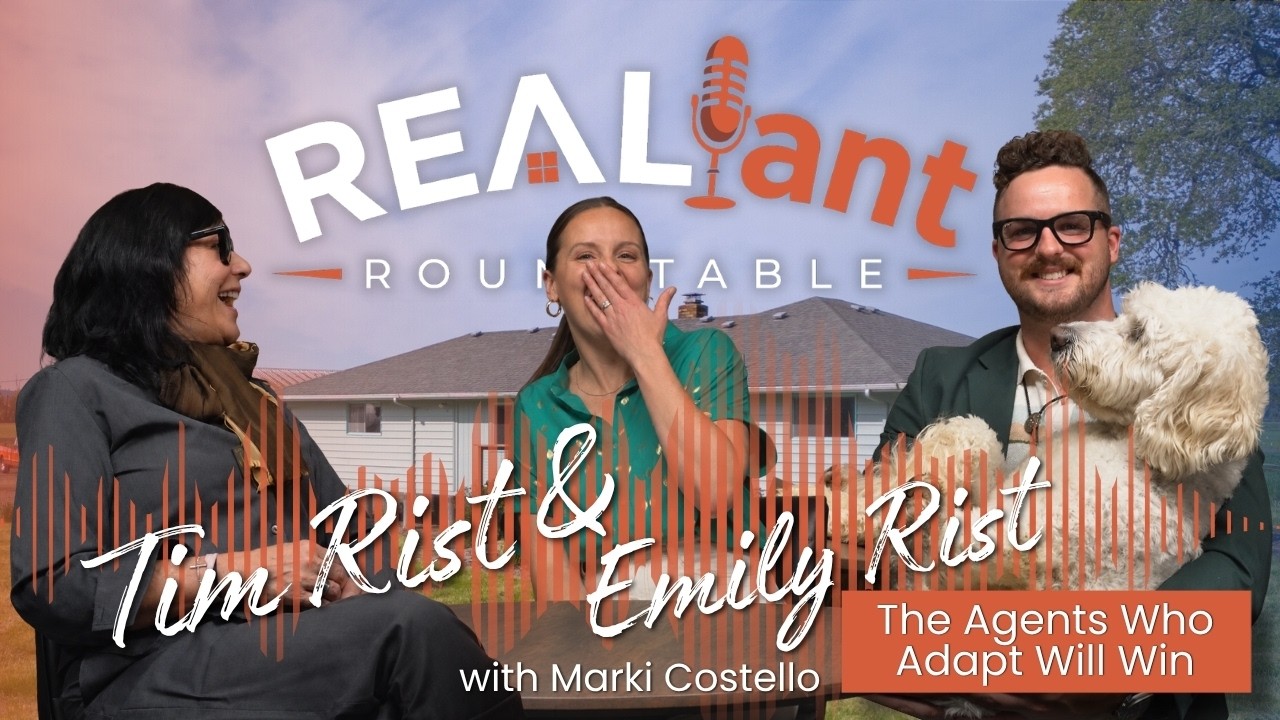
Real estate is personal
When a property decision carries more than a price
Real estate keeps changing, but the work still depends on understanding people, places, and the decisions that shape a community. In this Realiant Roundtable conversation, Emily Rist and Tim Rist discuss what agents can learn from architecture, development, local history, modern marketing, and the willingness to keep adapting.
New tools can help agents reach people faster, but tools do not replace local judgment or a clear point of view. The strongest professionals learn how to communicate in new ways while staying attentive to land, design, permitting, neighborhood context, and the long-term needs of their clients.
Adaptation works best when new ideas are paired with local knowledge, thoughtful design, and genuine relationships.
Watch or read
The complete conversation
The complete episode explores the evolution of Discover Oregon Real Estate, Emily’s architecture background, the challenges surrounding development and housing, and why agents should be willing to create useful content before it feels perfect.
Prefer to read? Open the complete lightly edited read-along below the video.
Read along with the episode
Marki Costello: From farmland to luxury listings, from commercial deals to digital strategy, this is Realiant Roundtable. Today’s guests are redefining what it means to market real estate in the modern era. Tim Rist is the founder and chief visionary officer of Discover Oregon Real Estate, AKA DORE. You see this marketing and branding, which I love.
Marki: His beautiful sister, Emily, and we’re gonna get into her fabulous, wonderful story and where she fits into the DORE community in a second. But this is Realiant Roundtable, where we discuss all things really happening in real estate in Corvallis, Oregon, Eugene, in this beautiful area we call home. Welcome to the pod.
Tim Rist: We’re glad to be here.
Marki: Can you introduce your beautiful guest?
Tim: This is Tankerton. He actually really does a lot of the heavy lifting for sales, We had to keep him involved, but.
Marki: No words because you are too cute. I just wanna eat and kiss and smoosh and cuddle with you.
Tim: He’s like, "That sounds good to me." I’ll honor him with the pin that I carry, ’cause people are like, "Well, why is your dog on your pin?" I was like, "Well, it’s ’cause he does a lot of the work for us." He can’t. He’s a founder.
Marki: Let’s jump into the office and you guys and DORE and everything. One thing I have to say right off the bat: when Scott said, "I wanna do a roundtable with realtors," we brainstormed a little bit. I said, "Well, I want this guy Tim on." I love that Tim is using social media.
Marki: You are into branding and social media marketing, and you get the power of having all of these tools at your fingertips, where I feel like the majority of people in Corvallis and Albany are so afraid of media in a lot of ways. Can you talk about that?
Tim: I’m afraid of media too. I’m already pitting out right now. It’s not like it doesn’t scare me. To be vulnerable in front of camera. It’s just the terror that’s worth embracing for the trade-off that it does for my clients and their goals.
Marki: Has been the trade-off? How has social media and marketing really helped you in your career?
Tim: I think, if we just distill it down to the client objectives, our mission at Discover Oregon Real Estate and at DORE Developments is really to facilitate the discovery of community, legacy, and adventure through real estate. We believe beautiful housing can also be affordable and we have all these tenants or table stakes of what we believe is the core to the service experience.
Tim: We have our values, the 10 C’s, which is all about connection and community and candor, which means keeping it real, and clarity, helping people make informed decisions. Social media’s a vehicle for all of those mechanisms. It’s an easy one-to-many, no-brainer tool for us to use. For exposure on our listings, I think it really started there.
Tim: I knew that we were making big promises to our clients when we’re asking them to entrust a percentage of the equity of their home. The premise is that better produce an ROI. If it doesn’t, I don’t feel good. Charging it. I don’t feel good at going to bed at night. Or building wealth if it’s not by proxy of providing substantial measurable value to our clients.
Tim: I think it really started with, when I launched DORE, we just had a few, videos that really took off and, had the double purpose of not just providing a keepsake for the client, like a presentation for the home that they could go back at and look at and be proud to share. Really, we started focusing on, how do we sell a home before someone walks through it?
Tim: Because if you can sell a home through media, through the click of a button, then it means your buyer is not limited to any geography. It’s anyone who can click play on a link.
Tim: I started to realize that is, one of the most important elements of our marketing promise to our clients, is can we sell our listing through the click of a link before they get to the house.
Marki: Also, you gotta think about this next generation. Listen, I’m a mom to three. I have a 35-year-old, I have a 29-year-old, and a 16-year-old, and that generation, like especially the 29-year-old and the 16-year-old. This is where they’re, if you’re not here and you’re not here, then you don’t exist. That’s the way. I even said to my 16-year-old, "Go to the website."
Marki: He goes, "Ugh, I wouldn’t go to anybody’s website," meaning they don’t comprehend. If you’re not on social media, you. To this next generation. So I say to realtors all the time that are 50 or 60, I’m like. They’re like, "Well, I’m just not into that."
Marki: I’m like, "Okay, so then you only plan on selling for the next five years to the clients that you already have that refer you. Whatnot, because you’re never gonna get the next generation of clients and business." How did DORE, D-O-R-E, come to be as far as, how did you know this was your mission statement, and where does Emily fit into this beautiful DORE family?
Tim: That probably goes back. It’s a two-part question, but as far as Emily and I working together, that goes all the way back to college days, ’cause. We’re siblings. We grew up, we had the luxury of growing up. And I don’t know how much you involved you were on Uncle David’s projects. I, we all grew up periphery to construction.
Tim: In college We started running painting businesses, and, we had multiple siblings that worked in it, but Emily was the best person that I ever brought on to run a team within our painting, our painting.
Marki: Were you painting? Indoor and outdoor? Really? And where did you guys go to college?
Tim: I went to Oregon State.
Marki: You were rivals. Little bit like, ooh, Ducks beat. I love it.
Emily Rist: Every sibling went to OSU except for me, because I went to study. Honestly, and don’t tell U of O, maybe they’ll know. I love U of O, and if there was an architecture program at OSU that was as good as the one at U of O. I would’ve gone there. U of O’s got a great program.
Marki: You are an architect. I really feel like you guys are going to the next level. I also think that, now and in the future, we want things that are simplified. We wanna be in one place. I wanna buy this piece of land and I wanna build this. Oh, well, great. I have an architect in this DORE community. That’s gonna help you do the plans.
Marki: Then I’m gonna help you close on the land. How are you redefining real estate with this next generation of having everything under one umbrella?
Emily: If I might just speak. From the architecture side of things. I have a decade of experience working for different firms across the state. I’ve always worked and lived in Oregon. But there’s, it’s such a siloed industry.
Emily: There’s so many inefficiencies when you need to build a project, develop a piece of land, the amount of people and companies and different expertise that you need to make that happen is a lot. Most of the time, a lot of the time, people don’t know where to start.
Emily: Not only do they need somebody to help shepherd them through the process, but if you can, that same person can also come with a trusted team of people that they’re more integrated in it with than, the typical way that things are done now. You’re gonna save a lot of money, you’re gonna save a lot of time, and you’re gonna save a lot of heartache.
Emily: I am very empathetic, and the difficulty people experience while trying to build can be heartbreaking. I also love to dream big, and Tim does too. When we started discussing this idea last year, I became passionate about solving some of the problems I repeatedly encounter in the standard architecture model.
Emily: You can speak to the other side of it.
Tim: I think it does start with us working together building businesses in college. We were cutting our teeth on selling a product or service to clients. Trying to make things simple and easy and concierge. Customer service. So when both of us got our, career jobs, me building a, becoming a real estate professional, building a real estate team, and eventually starting a real estate brokerage.
Tim: With a vision to bring all things home into one place.
Marki: Everything, title, financing, architecture. Is that what you mean. When you say everything in one? Like.
Tim: From start to finish. One stop shop. It’s a consolidation we already see occurring in the industry. We just plan to be on the front edge of it, not to service Wall Street. To create something truly accessible to our clients. That streamlines a lot of the chaos and the noise.
Tim: The development portion is perhaps, in my mind, one of the most important opportunities, especially for the state of Oregon.
Marki: Meaning, and we, and it’s really lacking affordable housing. I see everywhere things are. So, have you seen that across from Corvallis High School, they, that lot sold for. Do you know how much that lot sold? It was one big house. I think it was like.
Tim: They, yep. And then they’ve got, they, I think it’s off Spruce. Are you talking about the one. I’d have to go back and look at the exact sold amount. I don’t wanna say it wrong. On a, on a, on a podcast show. But I as the broker for the city of Corvallis, ’cause I do all the real estate for the actual city.
Tim: I will say Corvallis has a unique challenge of. Really going all the way back to the ’70s. That has certainly most recently been dramatically counteracted with some really smart thinking and great leadership. Our city manager’s awesome. I’ll go on blast to say Mark Shepherd rocks.
Tim: People, can say what they want, but I’ve gotten to see from the behind the scenes how they work as a team, how the city works as a team, and it is hard to get anything done inside of the bureaucratical layers. Of city government. But I will say that right now you see, just recently there was three cranes.
Tim: We’re seeing a better influx of, units being built in this last 24 months.
Marki: We have the new hotel. Which will have, you can. Be able to rent and buy, I hear, up in the hotel. Which is a hotel, I think, originally from Eugene. What’s it called?.
Tim: That’s going in? It, the, and just to point on that, since you brought that up. There’s a lot of people that are mad about the kinds of you know, housing structures. That are going in. But really, what we wanted to solve with the DORE Developments brand.
Tim: Which is an extension of the DORE family, is this pressure on the entire continuum of housing, from affordable housing, obviously and entry level housing. On the, on the, on the front end, middle income housing, and then also luxury and final resting place housing. We need spaces for.
Marki: When you talk about, Emily, what kind of, if I’m wanting to buy a piece of land, and Tim, we find the piece of land, we close on that, and I’m saying, "Emily, great, let’s build this modern farmhouse that I could live in, and I can leave it to my kids and my grandkids and so on,", am I gonna get hurdle after hurdle after hurdle?
Marki: Because I am someone that came from California, who raised my kids in Pacific Palisades, and we know it’s burned down. Karen Bass, the mayor, promised, "Oh, no permits. You’d have no problems." Everybody’s having problems. State Farm cut off a lot of people, but people that did have State Farm, State Farm’s like, "Hey, we’re broke. We’re only gonna pay you 70%."
Marki: It’s just, and they’re just getting. [Slaps hands].
Emily: It’s getting harder and harder to build things. There’s more and more regulation and it’s all from a good place. Energy codes are getting tighter. Acoustic codes are getting tighter because we want people to have better experiences, and this Primarily in the commercial world, that stuff is getting really tight. Then California is also, kind of in its own category.
Emily: I’m never one to, sell you a false bill of. "This is gonna be so easy and simple." I’m never gonna say that. Because it never is. But what I will say is I’m gonna be here every step along the way. And when it comes to deals that are being like, where we’re working together.
Emily: We’ve done this on a couple of houses, we’ve done it on a couple of multifamily projects, where Tim has the market in mind, right? Tim understands the market, and I understand design and beauty and how to create defensible spaces for. People to live in, and beautiful spaces that will be meaningful for them. And.
Emily: We work together to be like, "How can I design something that is going to be able to be sold at a certain rate?" I keep costs in mind and kind of have k-, basically a positive, a feedback loop, a self-correcting feedback loop between ourselves and the.
Marki: Is your brand, and are you into sustainable, are you.
Emily: It’s, so there’s a lot of different things, right? Now it’s really about how do we create accessible housing for people? How do we create things that people will actually wanna buy, like townhomes, things where they can start building their equity. That aren’t just completely soulless and void of beauty? ‘Cause I don’t know if you’ve seen these terrible I mean, they’re just. It’s just awful for me.
Emily: I just wanna stop that. I wanna. I know that a lot of people, even in residential, they wanna cut the architect out because they’re like, "Look, I don’t need you technically. I’ll just have a builder-led design." Unfortunately, when it comes to most normal developers, it’s all about the bottom line.
Emily: Obviously the bottom line is important, but that bottom line, if you’ve created something that people hate, that’s why people are The NIMBY folks, it’s because they’re not creating beauty.
Marki: They, everything’s a cheap vinyl floor, let’s do the cheap this, cheap that. And I like, coming from California, when I was looking when I first moved here to buy something, I, first of all I said to a realtor, I was like, "Send me to the bougiest neighborhood." I raised my kids in the Palisades, Westside, Brentwood. Holmby Hills. Where is that of Corvallis?
Marki: Then they would take me to, absurd places, and then every house looked the same. Meaning, and I just was like, "Where’s the charm and the character?"
Emily: Because they’re, there’s, I think. There’s a lot of reasons. It really is money, it comes down to it. And so the idea is if we can create efficiency then we can invest some of that money into what people really care about. And, people say they care about just money, they don’t. Nobody wants to live in some of these developments that are going out there.
Marki: Cookie cutter. You can see your neighbor taking a shower. Me.
Emily: You have no yard. You have no porch. You have no, what I call. Where it’s like your space. You take care of it. There’s so many different, studies and examples in our history of what happens when you say, "Hey, lower income people, we’ll build you housing." But if you’re not building housing for them that they will love and appreciate. They’re not gonna take care of it.
Emily: It’s gonna be a disaster. Pruitt-Igoe, look that up. That was so, total thing that we have to learn in architecture.
Marki: If I didn’t have my little slice of heaven where I am where I could go. On the beautiful grass, look at the river. Grow my roses, pick my, I’ll grow cherry tomatoes and cucumbers. And I never thought that was important as I do now. As you get older and what’s important. But So here’s where I struggle with Corvallis a lot of times.
Marki: I’m like, we are this amazing college community, right? I have to drive to Albany for Target. I love Market of Choice. It’s like a Whole Foods. Meets a had a babe with Gelson’s. But I don’t understand, why can’t we have a Target? Why. We, you can’t buy a tie in town barely. You can’t buy baby clothes in town unless you go to.
Tim: I think it touches on something that I’m glad Emily brought up. This NIMBY, this "not in my neighborhood". Energy, which is just a, kind of a almost a default, resistance towards, a lot of change or growth of any kind. Because of the homeostasis it could threat to disrupt. So I could speak to the energy generally. I couldn’t speak to those brands specifically.
Tim: I wanna tie it back to a, the bigger picture thing that we really wanna proselytize today, which is solving placelessness. When we think about the rhetoric that was started in the ’70s of, there was a time when our city council produced literature and circulated it to the community of, "Here’s how to stop a development." Right? Like he, educated the community on. How to stop.
Tim: It was because of these builder-led, financial bottom line led kind of merchandising and development means which we really, if we wanna preserve beauty in our world, we actually have quite a responsibility if we can make a difference. To do Because once these developments and commercial buildings and things are set in motion, they’re gonna be there for a while.
Tim: We think about the home, the 19- the early 1900s homes that are. We think about all the home, all the, all the homes that have been built in the 2000s, they’re gonna be here in the 2100s.
Tim: I think that because of the lack of responsibility of which a lot of both commercial and residential development has occurred, it makes sense that the average consumer’s, has a default resistance to it. I’ll say on the concept which you brought up is, like the idea of having a place for everybody on the continuum.
Tim: You asked the question of, well, what is, what how do all of our companies work together? There is a singular vision, and we were just talking about it today, which is to solve. This problem we’ve coined called placelessness, and it’s kind of this trifecta of problems related to loneliness, to houselessness, to homelessness. But really, we’ve kind of dialed down to, three key categories.
Tim: Of placelessness pervading in our society, and one of them is a habitat problem. We just need more spaces for the humans that are being born. There’s not enough low-income and affordable housing to house the people that are either consolidating into other houses. Or living in cars or living on the street. We have a sense of home issue increasing. Our.
Tim: Let’s just talk Oregon, and maybe not Corvallis specifically, but, mental health is in decline. Especially in this post-COVID era, the amount of time spent on screens and outside. Of connecting people, a sense of home is hugely in threat. Even if we solve the habitat problem, there’s another layer of work to solve the home problem.
Tim: Then the bigger, challenge facing especially the next generation is this sense of hopelessness for the future. We think we solve for placelessness by solving for habitat, by solving for a sense of home, and by sowing into a hope for the future. Now, we can’t do all of that under the umbrella of a real estate and development and architecture firm, right?
Tim: We can do is we can create an economic engine that sets an example in the industry for what we call the Place Pledge. 1% or more, often more, of gross income towards causes solving placelessness.
Tim: That’s where really our vision and our collaborative energy and the call to action that we’re putting out to all of our vendors, our clients, and the people that we’re in collaboration with is just try it. Commit 1% or more of your gross income this year to a cause that matters to you.
Tim: We like to think that for the most part, whether it be the Humane Society or Boys & Girls Club. All these causes are having a fingerprint on placelessness to some way. Degree. And if we could fully fund all of our nonprofits, we would be solving our business mission.
Marki: We gotta vote by, what is it, Tuesday of next week. We’ve gotta. Our ballots have to be in, and I was looking at my. This is the first time I’m voting in the state of Oregon. I’m looking at the ballot. Are we. Are we half. I see a lot of, the, in. No one’s running against half these people. Who do we like for governor?
Tim: For sake of all the diverse group of constituents I represent from a business standpoint. I would say that our mission as a business is decidedly nonpolitical. The reason why is because I am probably a part of a large Contingent of Oregonians specifically. That have lost all confidence. In the state coming to solve these problems. We could.
Tim: There’s an old adage that says, "Hope deferred makes the heart sick." I think that we see a lot of heart sickness and people deferring the sense of health in their community out to the government to come solve it. I’m not wanting to be one of them. I’d rather do is take the challenge by the horns and say, "Well, what can I do?"
Tim: "And what can you do, and what can we do. Regardless of what the government does?" I think a private sector movement towards solving placelessness is actually the key ingredient for homelessness to become erased in our, in our community.
Emily: I. Oh, I’m sorry. I was gonna.
Marki: I was just gonna say my kid thinks I’m crazy, because the other day, a man outside a Market of Choice had a sign, "So hungry." I said, "You know what? I’m gonna go get him a turkey sandwich at Market of Choice. Delicious. It’s a $15 turkey sandwich." Go in there, br-, bring it out.
Marki: I get a water and I hand him the turkey sandwich, and he looks at me and he goes, "I’d really rather you give me five or 10 bucks." I’m with my 16-year-old, right? And I’m trying to make a point, just do the little things, right? Here’s what we can do. We can His stomach won’t growl. For the next eight hours, ’cause we’re gonna provide a sandwich.
Marki: I did look at him and I said to the unhoused man, I said, "Then put on your sign, ‘Need a fifth of vodka so I don’t get the shakes,’ and I’d probably give you the five bucks. Let’s stop lying and saying you’re hungry, ’cause I went. Tried to solve that problem. Of you being not hungry, and you didn’t want it."
Marki: I also told my son, I go, "You guys, go. Let’s buy a big thing of dog food. Let’s put it in little Ziploc baggies. When we see the homeless, the unhoused with animals. Say, ‘Here,’ like, ‘here’s a, here’s a bag of dog food.’" You know what I mean? Little things that we can do to make the world a little bit better place, but.
Marki: I find that this next generation, they’re not gonna be able to afford homes. I. My older kids that live in LA, what they pay for rent? $4,200. My mortgage on both my places were, 3,000, 3,200. Meaning they’re paying more in rent. Than I did for my mortgages. I don’t. Is that like that in Oregon, meaning are we gonna see.
Emily: Getting closer. It’s getting. That’s how it’s trending, right? I think just kind of speaking to the idea of, starting with us and then influencing the powers that be. Because that’s how I’ve seen real stuff happen. In Portland, there’s a movement to create communities that are more dense and more filled with opportunities to connect with your neighbors. That had to be something that changed in the code.
Emily: That didn’t happen until somebody said, "We’re gonna show you how this works." Because you can’t get that type of change without proving it. We have to figure out a way to prove it so that the very slow-moving wheel of bureaucracy finally gets it. It’s like, "Oh, yeah, let’s go ahead and make this change in the law or the code." Stuff like that.
Emily: It’s possible, and it does take. That’s a really small, very grassroots of, literally just solving the immediate issue of the person in front of you. If you’re thinking, "How can I The rules. Prove it first.
Marki: That’s what I said to my 16-year-old. I go, "Here’s the thing," ’cause he’s like, "It’s so hopeless. It just seems like there’s no. " And I said, "Well, that’s BS, because we can go solve this guy’s problem with this sign." This guy who needs dog food. We can go. Now, I’m not saying, Rome wasn’t built in a day. We’re not.
Marki: These are little things that we can do, and those. All those little things will then build into something bigger.
Emily: I think it’s like we’re not actually powerless, and that’s. Where the hopelessness comes from, is if you have a if you can create a team of people that is all under the same vision, and we wanna create positive change in the world, we can make it happen.
Marki: That’s what this generation hasn’t figured out, where they have all the power with their, they have so much power with that phone in their hand. Meaning, if everybody said, "Hey, Target, we’re not shopping there for two days until you change X, Y, and Z." If everybody stuck to it, and they did not have money at every Target in all of America for 48 hours. They’d listen.
Marki: There’s where the power lies, and this generation coming up They have a lot of that power. And your generation, too. Because you guys are young, right? Our generation gets that it’s okay to, talk to our neighbors. And my 16-year-old will be like, "Mom, you talk to everybody." I’m like, "Absolutely."
Marki: Because if a shooter came into this market or this place, I would get us out in eight seconds. Your generation would be, trying to take a picture and video it. And, go live, right? Like. You wouldn’t even realize. How can I you know. But let’s talk about social media for a second, because I. We talked about it earlier. We talked about the power of it.
Marki: We talked about, do you. Because I, what I love, and ’cause I like stuff that’s a little bit, off of. I like how the, you’re humorous, and you have your dog, your sweet dog. And, you’ll be at the piano, like. Singing a song and being creative. Because if I was coming to Oregon from New York and I.
Marki: Wanted to buy a house and I’m looking for a realtor. You’re the type of realtor because I’m going, "I love his personality. I love how he shows a house." "I love how he goes. " It, you. That shows me who you are in. Many ways. Do you find that other, your peers in Oregon, go, "Oh my God, Tim, why did you make that crazy video?" Or no?
Tim: It’s funny. Oh, so I’ll think of one specific example that happened recently. It’s funny you bring that up. Because we had a property that we recently listed. I helped my clients buy it for just shy of a million dollars. A year later, with minimal improvements, we’re listing it at 1.1 Ends up with multiple offers in a.
Tim: In that process, we created a ton of hype, because we started a music video with. One who’s aging out and now a title rep. Of us just being ourselves, my buddy Mike Hill, give a little shout-out to him, decides to, turn the water on in the bathtub. I’ve only got one change of clothes. I’m like, I gotta quickly shed. And so now it’s like a, t.
Tim: Two dudes in the bathtub to two shirtless dudes. In the bathtub. And it created so much hype on that. Property before it even hit the market. We had a lot of people who knew about the listing just because of that kind of clickbait moment. All it takes is one or two buyers competing with each other to make a massive financial different in our, in our client’s world.
Tim: Our clients were, bless their hearts, they’re like, "We give you full creative control, Tim. You be you." I was like, "All right. I’m gonna take that and run with it.", and honestly, yeah, we got hate mail from that video. We got people.
Marki: Who was sending you hate mail? I hate to say it. It c. That’s what it comes down to, because they wish they could do that. Because I’ve talked to.
Tim: I was, we laughed it out. We laughed it out.
Marki: It’s like when I’m coaching an influencer and they’re like, "I’m not being my authentic self, ’cause I don’t wanna have the haters hate." I’m like, "FYI, the algorithm does not know the difference between hate or love." If they say, "I hate you," or, "I love you," algorithm does not know the difference. All they know is engagement.
Marki: Number two, when someone who doesn’t know you in your personal space not like you It’s jealousy. Why would. It’s, and I mean, I hate to say it, because I’ve talked to realtors, I’m like, "Oh, I don’t like the way I look. I don’t like the way they sound." I’m like, "Get over it." Get over it.
Tim: There was a time it may have, if I was starting out in real estate, it would’ve really bummed me out. I think I’m at the point now where after I’ve brokered over 700 deals and I’ve had people like the city of Corvallis go through an extensive vetting process to interview me against many of the other agents.
Tim: In our community and still hire me to get the job done. I think my stats and how I show up for clients and the job that we do, my team, it speaks for itself to where We have the platform to be a little bit more courageous and take a little, take a few more risks to get engagement.
Tim: I do think that the fear of being hated Right, is one of the things. That holds people back from engaging on social. Everyone wants to look good and be right. Some of putting stuff out there when it comes to marketing is, the willingness and the courage to get it wrong. To take those kind of risks.
Tim: With enough of the right energy, and then also have the commitment to bat cleanup, right? If I created a great video that I thought was great and it flopped and it didn’t have engagement, I’m still gonna pick up the phone every day. Call leads for the seller.
Marki: Do you think people, there’s just, a lack of accountability? I find that. Are so afraid to be like, "You know, my bad. I’m sorry." I, when I was selling my beautiful condo in the Wilshire Corridor, I said, "I want the youngest realtor who’s been having real estate for two weeks." Because she came, cute girl, Jessica.
Marki: I said, "I’m gonna give you X amount commission, but I’m gonna sell this house. I’m gonna show it every time." "I’m gonna sell this house." I sold it. I had I had 18 offers within four days. We made a record in that building for the highest rent. And she was like. I said, "I knew that I would be able.
Marki: " I go, "It’s The HOA dues are 2,000 bucks a month. I go, it’s a very specialized buyer who But you get, I said, all that luxury, and where California was with robberies and people getting I go, "We’re gonna. I’m the one that’s gonna be able to sell this to someone walking through it. I also didn’t fall for that narrative of, take everything out.
Marki: I go, "Lookit, my grandfather was a very famous comedian. I have beautiful black and white set, Universal Studios shot of them on the lot." "I’m keeping them on the wall. If someone can’t imagine their pictures on the wall, then we have bigger problems." I just hated that they all went through this cookie cutter school of. "We gotta take everything down. You can’t have this." Da.
Marki: I was like, "No, I’m gonna bake cookies every day so it smells like cookies. I’m gonna open. Everything up. I’ve lived it. I’m gonna share my experience." Plus, when you can sell, you can sell. I could sell a blind man glasses. I could sell anybody. I, do you, how do you feel about your brother’s selling.
Emily: You asked that, ’cause I, there is a big movement, aside from what we’re doing, there’s a big vulnerability movement. I don’t know if I can credit Brené Brown entirely. She’s a big part of it. She is. That’s what, that’s what people like to watch. There’s really big podcasts out there that are literally just about having real conversations, just people hanging out. People. Wanna be in the room.
Emily: I think it ties into the loneliness epidemic, but it’s like. People wanna be in the room with people having.
Marki: I tell that to Scott all the time. I’m like, "Just start shooting stuff, dude. I don’t know what you’re waiting for. You’re waiting for, perfect this, perfect this, perfect that." I go, "No."
Emily: People love raw. We, I’ve, and I think I’ve really upped his game in that sense. Where I’m like, "You’re pumping out content, and who cares if it’s sometimes a little messy or not perfect?" It allows people at home watching, going. "I’m not perfect. I’m a little messy."
Marki: I’ll, yeah. What I’ll say. Is the videos that I’ve seen you do where you are most authentically yourself, they’re the most successful ones. I can tell more ’cause I’m his sister. I can be like, "Oh, you’re performing a little bit. Too much in this one." And it’s, to me, less effective than. When you’re just like, "Here it is."
Tim: I’ll give a plug for our TV show that we’re launching this year, ’cause I think it’s on the vein of what you’re saying. Social media, it’s really simple. People do business with who they know, and trust. We, and this is the way to get in front of people, to let them know you. It’s the way for you to show yourself off, to be liked.
Tim: Because they’re gonna like what they know. And the consistency is what creates the trust. And, that’s a parroting, actually, from a meeting we had just today with our producer, for an Emmy, an Emmy-nominated show. And, we’re jumping on with the Real Shows Network to produce a show launching in September called Find Your Place, and it’s all about solving the placelessness problem.
Tim: Both the for-profits and the nonprofits that are. Actually making waves, and doing it in an adventurous and vulnerable and palatable way. And, I believe so much in putting content out there that we’re like, we’re we made a huge part of our business plan showing up for a TV show. And it’ll be one episode every three months, and we’ll do four-episode seasons, and we’ll take people.
Tim: Adventures and highlight cool things. But here’s, from a business structure standpoint, I think there are two funds that are under-touched for a business and for individual. I think in our life when we think about money coming in, resource coming in, it’s energy. It’s good for the good that it does. It’s bad for the bad that it does.
Tim: I think one thing that has certainly separated our brand story apart is that, we’ve always set aside a pioneering fund and a give back fund. From every deal. Right? In my mind, I have, we have our normal, costs for closing a transaction. We have our marketing costs. We have our overhead costs. We have our, payroll costs.
Tim: For me, the line item on a, on a profit and loss, in my mind, even if it’s mentally, what am I investing towards pioneering The next wave of value for our consumers? And for us.
Marki: You’re an innovator, you know? And that’s what it takes to. Move forward, you know? And I to piggyback off what you said, why we love the real raw, because it’s, I call it the three Rs of media training. When we reveal, we become relatable. And relatable equals ratings, clicks, views, likes. What I mean?
Marki: If you’re smart in how you do it, you do it in the context of the different conversations you’re having with people, whether it’s a podcast or an interaction at a coffee shop ’cause you wanna get a listing or this TV show that you’re doing, right? And people that try to be perfect and polished and be thinking about everything like, "No, say what you’re thinking.
Marki: You don’t think about what to say." Be in the present. Be here. You know? ’cause that’s where media is, and that’s why we love the behind the scenes. That’s why we don’t want it always perfect and polished, because we wanna go, "Oh, she woke up and felt a little bad today ’cause she has a cold and didn’t put on her makeup.
Marki: I don’t feel great and I don’t wanna put my makeup on to go to my meeting, so she just inspired me." You know what I mean? It’s just interesting where we are, where, art imitates life and media, and that’s.
Marki: When I got to Oregon, I was just like, "I’m gonna retire," ’cause I, my, I’m flying out to coach for two weeks, and I do a bunch of Zooms every day. But about a year ago, I was like, "Well, why isn’t this town doing more media? They have the number one media coach here. Why aren’t I doing media here? Hello?"
Marki: Then I just said, "I’m gonna crack media in this town." I’m gonna crack it. I’m gonna let people not be afraid of it. To embrace it. It’s like when I first got here, I was like, "Where’s a great place to get a facial?" And then I would look. I’m like, "Who’s doing it online?" I couldn’t find it.
Marki: I’m like, and then if I did, and then I finally found Capri’s and Scotty, and I love them. Meaning, my point is it should, it’s 2026. I shouldn’t have to work that hard. To find those things that make a community. When I do find you or your website or social, give me a little peek in. I wanna peek in. What does the salon look like?
Marki: Are you guys like? What’s your philosophy? Are you. Just give me a little bit. Then when I come on the first day, I’m like, "Oh, I loved your this. I love that you have kids. I ha-" Like, then we find some common ground. So it’s just, that’s what I’m here to do is, you’re redefining real estate through.
Marki: I’m redefining media, and starting in a small town to go, you don’t have to be afraid of it. Just embrace it. ’cause it’s not going away, people.
Tim: There’s a lot of great energy here. I’m glad that we’re pleased to be able to, launch a nationally televised TV show. I will say, outside of Corvallis, we really are Oregonians, and I joke that, there’s two types of Oregon. There’s Portland, Oregon, and non-Portland Oregon. Political nod to the, there’s the there’s the tail that wags the dog in a lot of ways.
Tim: I do think that there’s such an opportunity for us to go, in this state, from one of the bottom three to do business in, right? Now we’re trending towards bottom 10% in literacy for kids, bottom 10% for mental health. We are moving up the chain in, percentage of, homeless population, houseless population.
Tim: There is no clear top-down plan for pulling Portland out of its commercial real estate crisis. DORE Development is part of what gives me hope. We have to show developers and businesspeople that the most profitable path can also care for the community economically, aesthetically, emotionally, and spiritually.
Tim: The best thing we can do for the next generation is refuse to let a lack of clarity prevent action. That is my call to everyone watching.
Tim: Because there’s so many people that look at homelessness and be like, "Oh, just throw your hands in the air." "Well, there’s nothing we can do. No problem." Every one of us can do? Every one of you guys can look at the nonprofit that’s actually moving the needle forward.
Tim: I’ll pick on Jackson Street Youth Services for a moment, because their goal is to end youth homelessness in the valley. They actually have that goal. They actually have a plan to hit it. There’s just a certain number of people and resources needed to achieve that goal.
Tim: The one thing that we could do to end youth homelessness is not come up with another program or solution or hire, elect someone different or. Vote on a different ballot. No, it’s fully fund that solution that’s already been set in motion and conspired by for decades. By really well-meaning, smart, servant-hearted people. We need to fund, fully fund our nonprofits.
Tim: Like before tax reform and all the ballot things, all the political things that need to change in our, in our state that many of us have very little power over in the day-to-day. The one thing that each of us can do today is take a budget of a nonprofit that serves a cause that matters to us and move that needle forward. That’s my call to action.
Tim: That’s what we’re doing with Discover Oregon Real Estate. That’s what we’re doing with all the DORE companies. DORE Development is just the most exciting addition to a network, a family of companies that we’ll be launching in the coming years to bring all real estate goals and needs into one place, and to create a vehicle and example of solving placelessness in our state.
Marki: I love how you’re disrupting it. I love how you’re redefining it. I love how real you are. I really appreciate you being part of Realiant Roundtable. Today with me, ’cause I’m a observer, but I love it all. An honor and a gift to have you on. And that is it for the pod today. We Thank you. See you next time. Thank you so much. All right, bye.
Ideas from the conversation
What agents can carry into the next client conversation
Start before the message feels perfect
Video and social content do not need to look effortless to be useful. Showing up consistently gives people a chance to understand an agent’s perspective, personality, and knowledge before they ever make contact.
Look beyond surface-level updates
Value is not created only through inexpensive cosmetic changes. Architecture, site planning, construction realities, and a property’s history can reveal opportunities that are easy to miss when every decision is reduced to a quick formula.
Understand the systems surrounding the property
Land, financing, permitting, design, infrastructure, and neighborhood concerns all affect what is possible. Agents become more valuable when they can help clients ask better questions and connect with the right specialists.
Use change to deepen relationships
Technology can expand reach, but trust still grows through curiosity, follow-through, and a willingness to understand what a client is actually trying to accomplish.
Around the table
People in this episode
Marki Costello hosts this Realiant Roundtable conversation.
Emily Rist brings an architecture and design perspective shaped by work with firms across Oregon.
Tim Rist is the founder and chief visionary officer of Discover Oregon Real Estate.
- Marki Costello
- Emily Rist
- Tim Rist
Keep listening
More conversations about real estate and the people in it
Watch more Realiant Roundtable episodes for conversations with Oregon real estate professionals about the ideas, relationships, and changes shaping their work.
Episode source: Realiant Roundtable, May 24, 2026. Guest details are intentionally limited to reviewed source information.
